Restoring Coral Reefs: Madagascar and Raja Ampat
Supporting coral restoration efforts for the protection of marine ecosystems, fisheries, and the livelihoods that depend on them
Coralive works with local conservation partners across the Indian and Pacific Oceans to rebuild coral reefs that are collapsing under the pressures of overfishing, warming seas, and pollution.
By combining rope nursery cultivation, community-led stewardship, and hands-on restoration, these projects accelerate reef recovery and help coastal communities safeguard the ecosystems they rely on for food, income, and protection.
📍 The Location
These restoration efforts take place in two globally significant marine regions:
Bay of Ranobe, Southwest Madagascar
A biodiverse coastal ecosystem where coral reefs, mangroves, and seagrass meadows intersect. Local communities depend heavily on fishing, yet degradation from overfishing has pushed reefs toward collapse.
Pulau Dayan, Raja Ampat, Indonesia
Part of one of the most biodiverse reef systems on Earth. Once impacted by illegal fishing and now threatened by warming seas and pollution, the area is home to Indigenous communities whose livelihoods, food security, and cultural identity are deeply tied to coral health.
Both regions face rapid reef decline—but also hold enormous potential for recovery through community-driven restoration.
The Problem
Coral reefs are among the fastest-disappearing ecosystems on the planet. In regions like Madagascar and Raja Ampat, the loss of coral cover directly threatens:
• food security for fishing communities
• coastal protection from storms and erosion
• biodiversity and nursery habitat for marine life
• eco-tourism and local income streams
• long-term cultural and ecological resilience
Degraded reefs struggle to recover naturally, especially as rising temperatures, destructive fishing practices, and pollution continue to apply pressure.
Without intervention, these ecosystems—and the communities they support—face severe decline.
The Projects
1. Restoring Coral Reefs in Madagascar
Rebuilding reef structure and supporting coastal livelihoods in the Bay of Ranobe
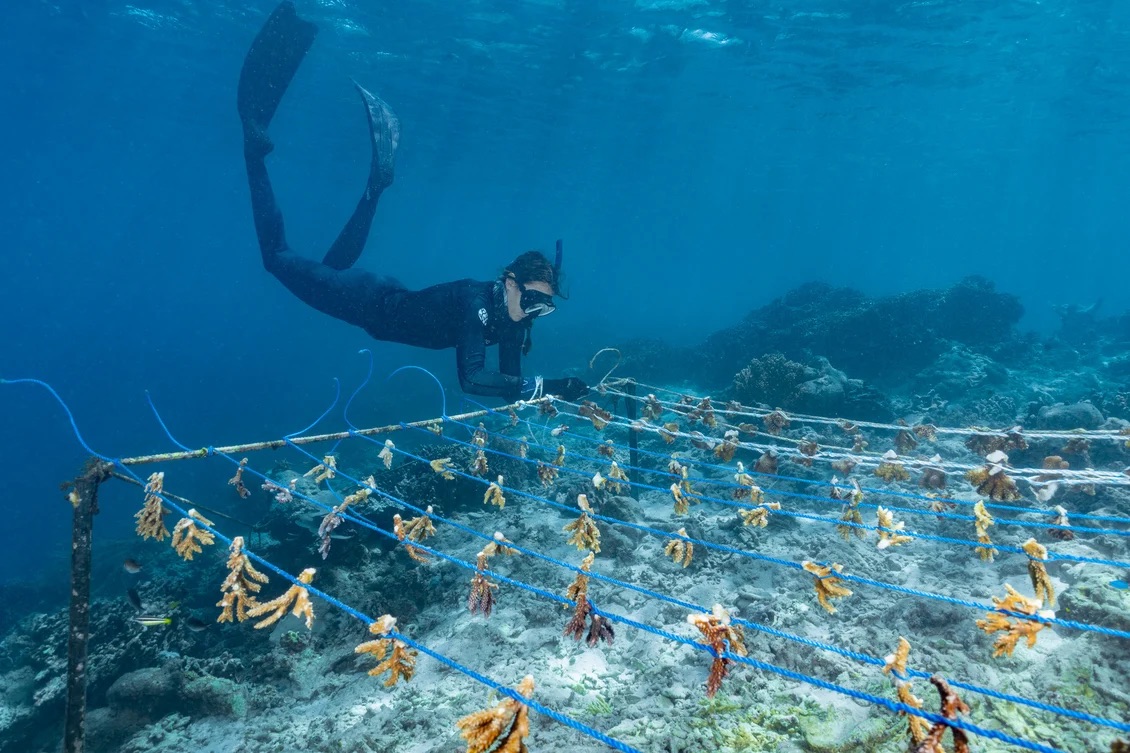
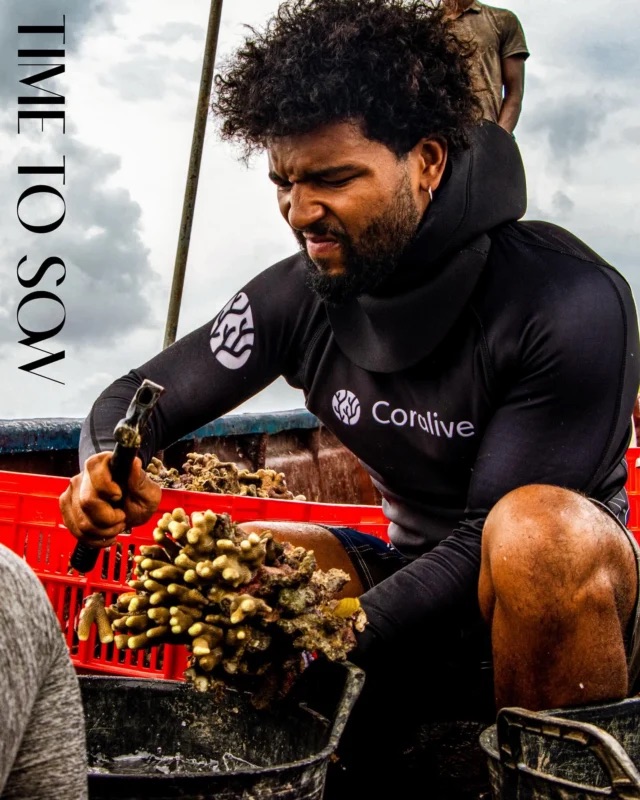
Coralive and the marine conservation organization ReefDoctor operate rope nurseries across southwest Madagascar to cultivate resilient coral fragments. Donor corals are clipped, attached to suspended ropes in sheltered nursery sites, and grown for 12 months before being transplanted to degraded reef areas, artificial reef modules, or locally managed marine areas (LMMAs).
Each fragment supports the recovery of fisheries, biodiversity, and coastal protection—strengthening the ecosystem services that communities depend on.
The Impact
Impact Unit: Coral fragment cultivated in rope nurseries
• 12 rope nurseries established and expanding
• 7,200 coral fragments currently being reared
• 16+ species represented
• Local employment: 4 trained staff leading restoration
• Restored reefs improve fish populations, coral cover, and habitat complexity
Verification & Evidence
Nurseries are filled or repopulated annually, with each batch of ~600 fragments tracked through its cycle.
Partners receive verified data including:
• number of fragments per rope
• species composition
• average fragment size (sampled)
• photographic evidence of new nurseries
Evidence is provided within 12 months of contribution, aligned with the coral growth cycle.
Sustainable Development Goals Supported
🍲 Zero Hunger
📘 Quality Education
♻️ Responsible Consumption & Production
🌍 Climate Action
🌊 Life Below Water
Learn more about the Madagascar Coral Reef Restoration project in your impact portal.
2. Coral Reef Restoration: Raja Ampat
Joining Indigenous communities in restoring one of the world’s most vital reef systems
In Raja Ampat, Coralive partners with local conservation leaders—including homestay owners, pearl farm workers, and community stewards—to restore reefs damaged by historical illegal fishing and growing environmental pressures.
Corals of opportunity (broken fragments with low survival chances) are collected, grown in rope nurseries, and transplanted back onto the reef.
This work strengthens marine biodiversity, protects shorelines, and supports Indigenous communities who rely on coral ecosystems for their livelihoods and cultural continuity.
The Impact
Impact Unit: Coral colony planted
• 4,300 coral fragments grown and transplanted
• 1 coral colony = 0.4 m² reef restored
• Total reef restored: 1,720 m² — equal to four basketball courts
• Community collaboration: ongoing training with local homestay owners and pearl farm teams
• Education: a conservation classroom built for youth & visitors
• Ecosystem protection: 1,200+ mangrove propagules planted to reduce erosion
Verification & Evidence
Nurseries cycle every 9–15 months, depending on species. Corals are monitored quarterly during growth and again for a full year after outplanting.
Evidence for supported colonies is provided 9–15 months after planting, once fragments have grown into mature colonies capable of survival on the reef.
Sustainable Development Goals Supported
📘 Quality Education
♻️ Life on Land
🌍 Climate Action
🌊 Life Below Water
Learn more about the Raja Ampat Coral Reef Restoration project in your impact portal.
How You Can Help
With Ecodrive, your business can fund coral fragments, nursery expansion, and community-led restoration activities in Madagascar and Raja Ampat. Your support accelerates reef recovery, strengthens local livelihoods, and protects ecosystems that millions of people rely on.
By integrating Ecodrive through Shopify or your existing platform, you gain automated reporting, transparent verification, and tools that show your customers the real difference their actions create—above and below the surface.